
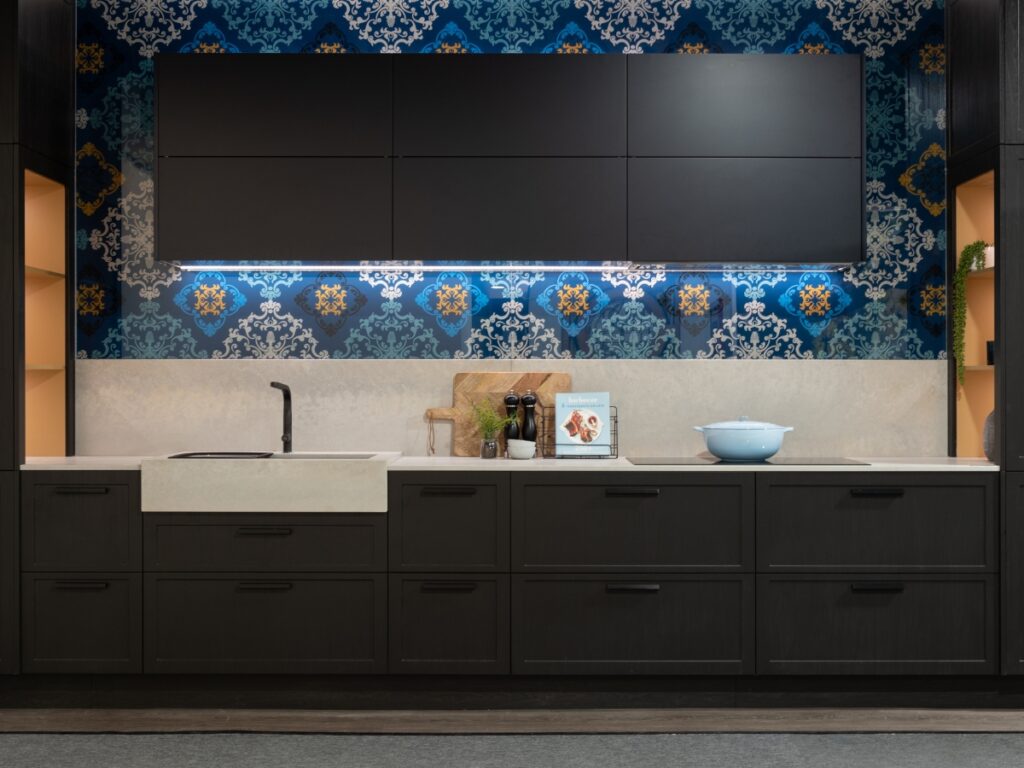
Lighting has a bigger impact on your kitchen than most people expect. It shapes how the space looks, how easy it is to cook in and how it feels when everyone naturally gathers there at the end of the day. Have you ever tried preparing dinner while standing in your own shadow, or felt like the room was too bright to relax in but somehow still not bright enough where you need it? Good lighting removes those small frustrations and turns the kitchen into a space that feels welcoming, balanced and ready for anything from busy mornings to slow evenings.
Start with the Right Foundation
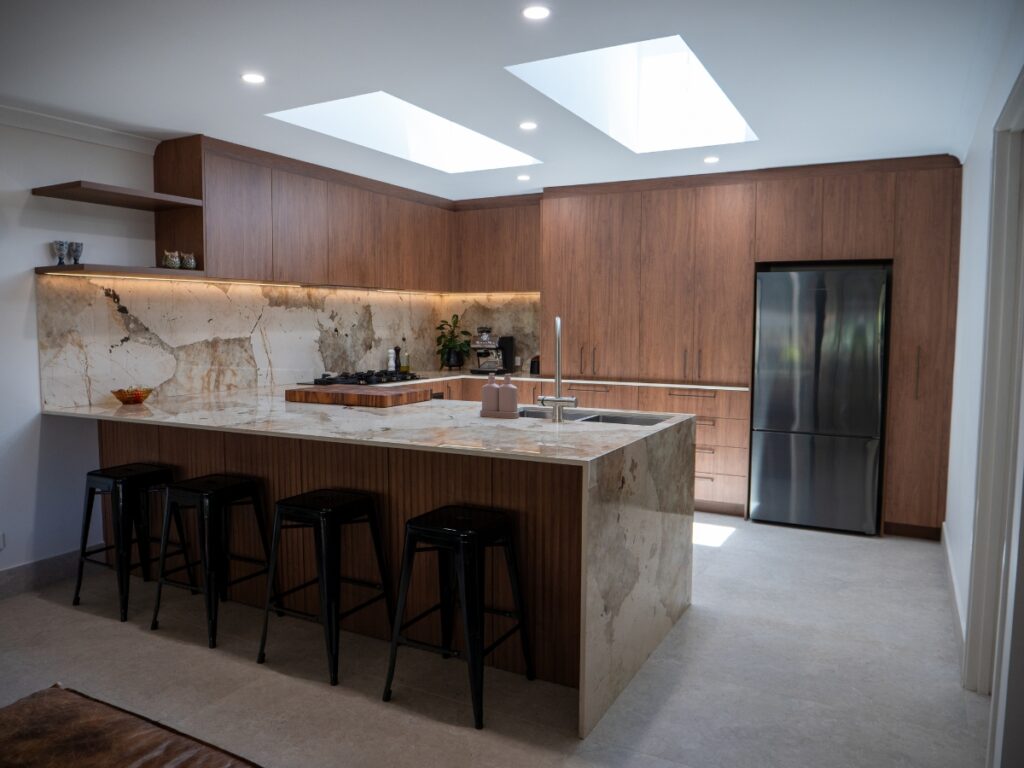
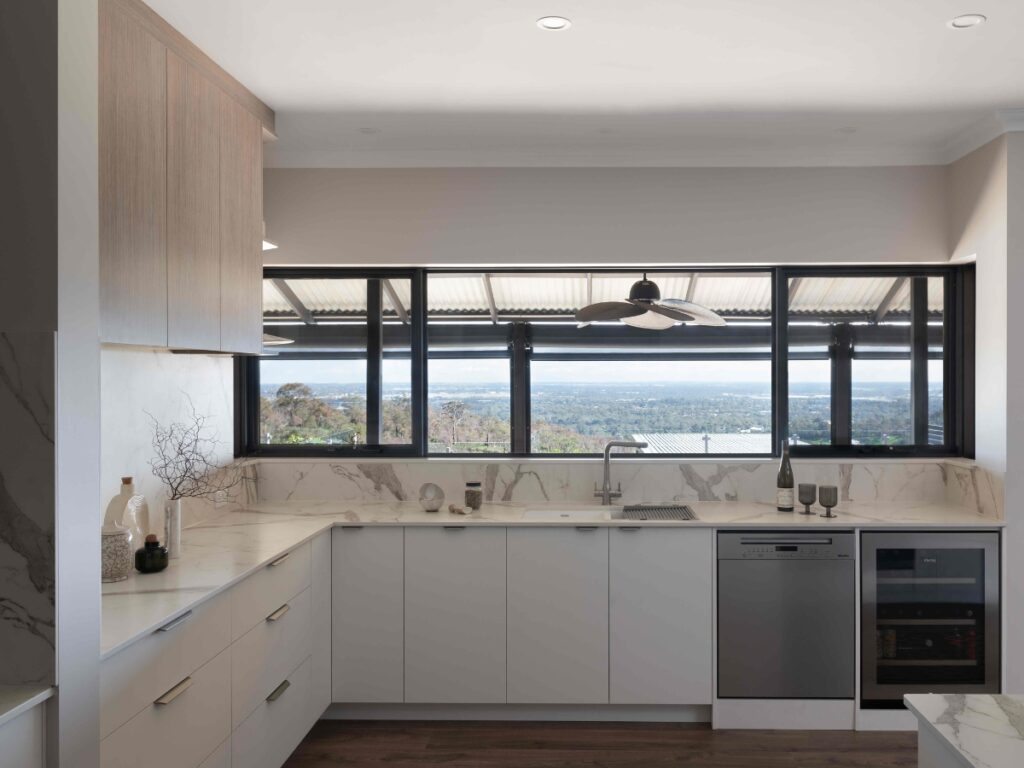
Most kitchens in Australia use recessed LED downlights as the main source of light. They provide general coverage across the room and help illuminate walkways and open areas. What matters most is placement. If a downlight sits directly behind you while you are at the bench, your body blocks the light and casts a shadow over the work surface. Positioning them slightly forward, closer to the front edge of the bench, helps direct light where it is actually needed, so everyday tasks feel easier and more enjoyable. Warm white light, usually between 2700K and 3000K, tends to feel natural and comfortable in a home setting. It complements stone, timber and neutral cabinetry and creates a softer atmosphere at night. Cooler white light can look crisp, but it often highlights glare and can feel stark once evening sets in.
Light Where You Actually Work
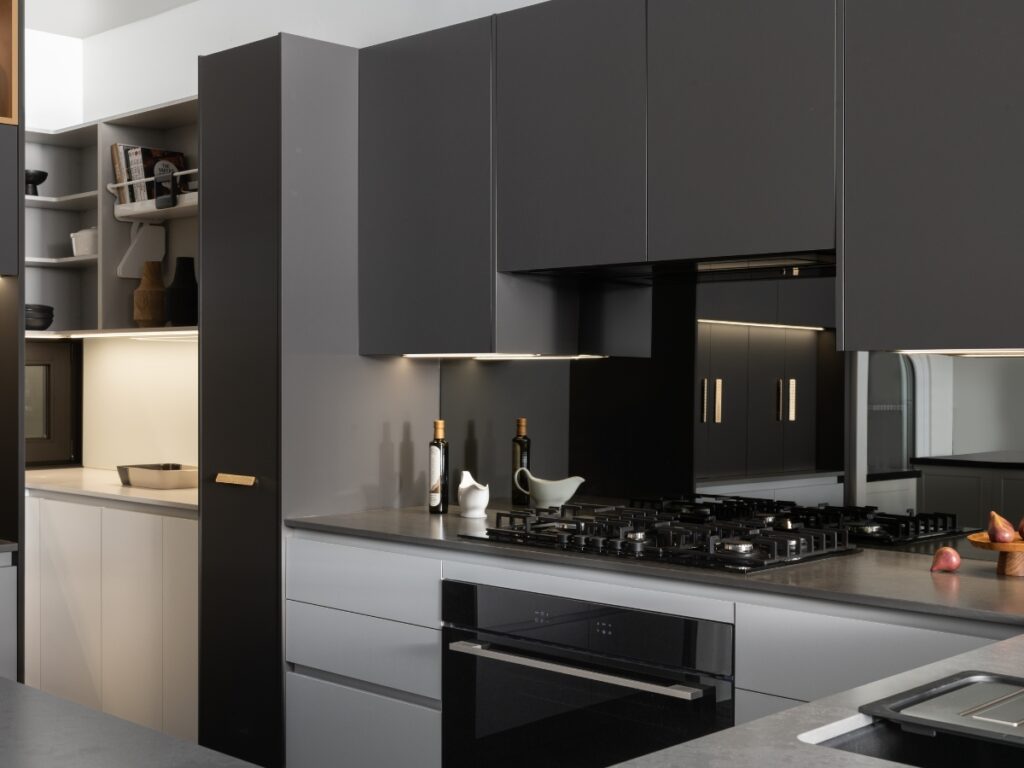
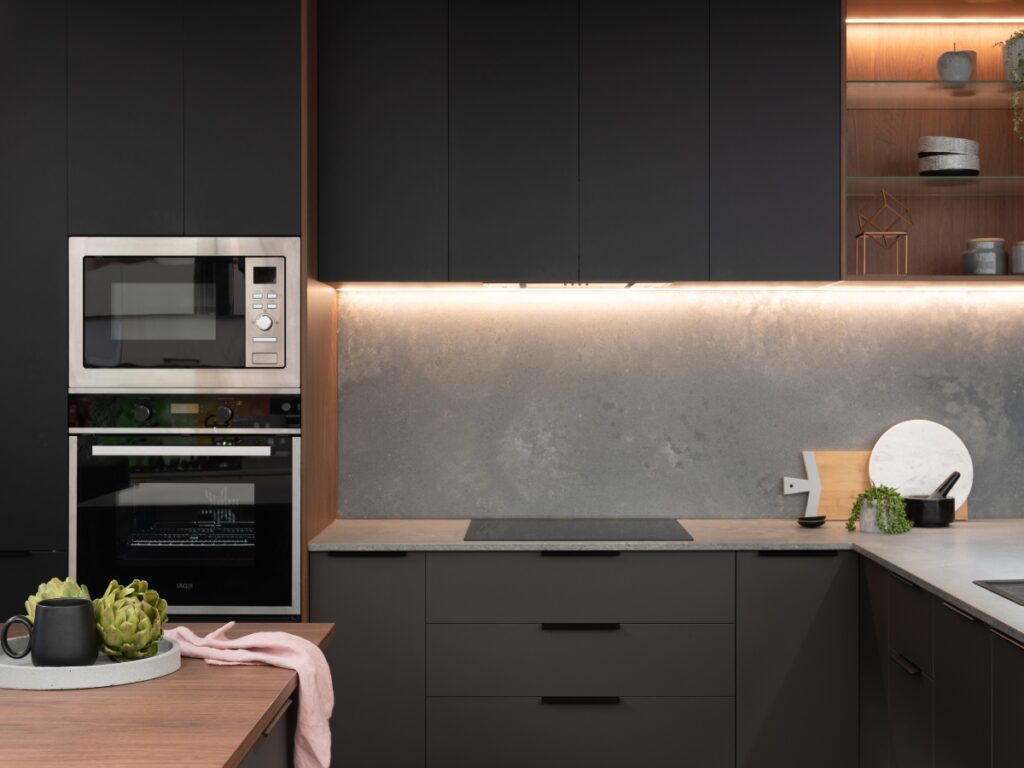
Under cabinet lighting is one of the most worthwhile inclusions you can make. A slim LED strip fixed beneath overhead cupboards shines directly onto the benchtop, removing the shadows created by ceiling lights. It makes chopping, reading recipes and cleaning simpler and more comfortable. In the evening, it offers a softer glow that feels calm without switching everything off. The same approach works beautifully inside a pantry or appliance cupboard. Without internal lighting, deeper shelves can feel like a guessing game. A vertical strip along the shelving edge or lighting under each shelf makes it easy to see what you have and move through the space with confidence.
If your kitchen includes an island bench, the lighting above it deserves careful thought because this is often where people naturally gather. Pendant lights are a popular choice as they provide focused light while also adding character. The size of the pendant should relate to the length of the island and the height of the ceiling, so the balance feels right. They need to hang low enough to properly light the surface, yet high enough to maintain clear sightlines across the room. When proportion and placement are right, the island feels grounded and inviting.
Create Mood with Layers and Control
Layered lighting is what gives the kitchen warmth after dark. Adding subtle lighting inside glass cabinets, beneath open shelving or along the bottom of the cabinetry creates depth and softness. These details are not about brightness. They are about mood. Instead of a single level of light, you gain flexibility and atmosphere, which makes the space feel more relaxed as the day winds down.
Control is just as important as the fittings themselves. Separate switches for downlights, pendants and strip lighting allow you to choose the right combination for different moments. Dimmers give you even more flexibility, so the same kitchen can feel bright and energised during meal preparation and softer when you are sitting down to eat. When lighting is designed this way, the space responds to how you actually live.
Dedicating the time and creating a strategic plan will help you master the layering of task, ambient and accent lighting to achieve a beautiful, dynamic space. Why not visit your local Kitchen Craftsmen showroom to explore the different lighting options or get some guidance with your kitchen lighting planning from our expert designers. We’re here to help, get in touch with us today to make an appointment for a free design and quote.